
Training by Numbers
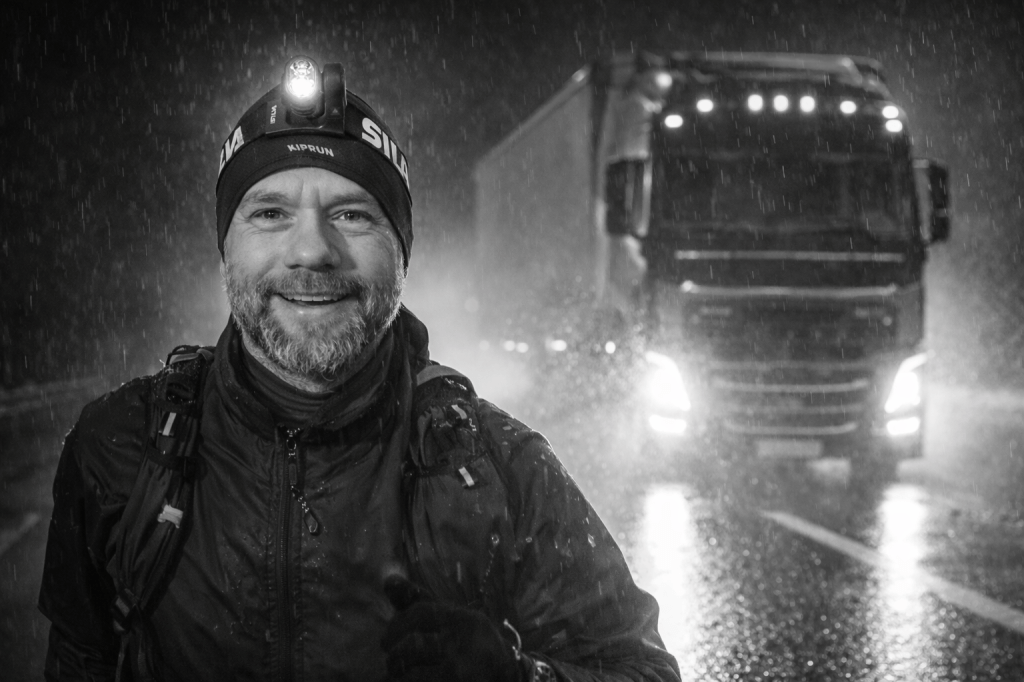
How a daily physiological monitoring system is shaping preparation for a 1,000km, 17-day ultra-marathon expedition
The problem with training by feel
Most endurance athletes train by feel. They wake up, decide whether they feel good or bad, lace up their shoes, and head out the door. On good days they push hard. On bad days they back off, or sometimes push through anyway. This intuitive approach has produced extraordinary athletes throughout history and will continue to do so. But for an athlete preparing to run approximately 1,000 kilometres over 17 consecutive days — covering 60 kilometres daily with a loaded expedition trailer through mountainous terrain — feel alone is not a sufficient guide.
I discovered this the hard way during a 10-week preparation block ahead of a major multi-stage ultra-marathon expedition starting at the end of May. The event requires not just the ability to run 60 kilometres in a day — I can do that. It requires the ability to do it again the next day. And the day after. Seventeen times in a row. That demand is categorically different from anything a standard training approach prepares you for, and it requires a categorically different monitoring strategy.
This is the story of how I built one — and what it taught me.
Building the foundation: the lactate test
Everything started with an incremental lactate threshold test — eight steps across a range of paces, each held for several minutes while a small blood sample was taken from the fingertip to measure blood lactate concentration. The test produced precise, individually calibrated training zones that no formula, no age-based calculation, and no watch algorithm could replicate.
The test revealed two critical thresholds. The first aerobic threshold — the pace and heart rate below which fat oxidation dominates and lactate remains essentially flat — sat at a heart rate of 138 beats per minute and a pace of approximately 5 minutes 12 seconds per kilometre. The second threshold, where lactate accumulates faster than it can be cleared, sat at 160 beats per minute and 4 minutes 22 seconds per kilometre.
These numbers sound technical. Their practical implication is simple: for a 17-day expedition covering 60 kilometres daily, almost every single minute of movement needs to stay below that first threshold. The expedition is not a race. It is a sustained aerobic challenge where exceeding the aerobic ceiling on day 3 does not produce a slightly slower day 4 — it produces a catastrophic day 8.
| Threshold | Heart rate | Pace |
|---|---|---|
| LT1 – aerobic ceiling | 138 bpm | 5:12 min/km |
| LT2 – anaerobic ceiling | 160 bpm | 4:12 min/km |
| Expedition Z2 target | 132 -135 bpm | > 5:20 min/km |
| FatMax zone (estimated) | 118 – 128bpm | > 6:20 min/km |
“The expedition is not a race. Exceeding the aerobic ceiling on day 3 does not produce a slightly slower day 4 — it produces a catastrophic day 8.”
The morning protocol: reading the body before it speaks
With training zones established from real physiology rather than estimated from age, the next challenge was daily readiness monitoring — understanding not just what zones to train in, but how hard to push on any given day based on how well the body had recovered from the previous day’s work.
The morning monitoring protocol I developed uses three measurement tools working in parallel. A chest-strap heart rate sensor provides research-grade beat-to-beat interval data that feeds into two analysis applications. The first produces a suite of time-domain and frequency-domain heart rate variability metrics including RMSSD (the standard deviation of successive beat-to-beat differences), PNS and SNS indices reflecting parasympathetic and sympathetic nervous system balance, and a stress index reflecting overall autonomic nervous system load. The second application produces a metric called pNN50 — the percentage of successive heartbeat intervals differing by more than 50 milliseconds — which proved to be the single most sensitive early-warning indicator in the entire monitoring stack. An Apple Watch running overnight provides a passive second data stream for cross-validation. A readiness app synthesises all of this into a daily readiness score anchored to a rolling personal baseline.
Together, these tools produce a morning picture that takes approximately eight minutes to complete and answers a precise question: what is my body capable of today, and what should I ask of it?
The five decision metrics
Through ten weeks of daily logging, five metrics emerged as the most reliable daily decision indicators, in priority order:
| Metric | Green threshold | Red threshold |
|---|---|---|
| pNN50 (HRV4Training) | > 8% | <2% |
| Stress index (Kubios) | < 12 | >15 |
| Ortho HRV rest | >18ms | <12ms |
| Mean RR interval | >1370ms | < 1310ms |
| Readiness score (app) | >80% | <55% |
When all five metrics are green, training loads fully at planned intensity. When two or more sit in amber territory, the session’s HR ceiling drops by 5–8 beats per minute. When metrics hit red — particularly pNN50 below 2% and stress index above 18 simultaneously — the day’s prescription changes fundamentally, not the session duration but the ceiling at which it is executed.
What the data revealed: five unexpected lessons
Lesson one: you cannot distinguish illness from fatigue without measurement
In late March, a viral illness spread from a household contact. The morning data caught it before any subjective symptoms appeared. The stress index began rising from its baseline of approximately 11 to 14, then 16, across three consecutive days while pNN50 simultaneously collapsed from 12 percent to 1.35 percent — a level approaching the absolute floor of the metric.
Subjectively, the illness felt like mild fatigue. Without the data, it would have been trained through. With the data, the pattern was unambiguous: this was immune activation, not training fatigue. The distinguishing feature was that the metrics did not respond to rest the way training fatigue does. A full rest day that would have restored a fatigued athlete’s morning numbers produced no improvement — the stress index remained elevated, the pNN50 remained collapsed. The immune system was consuming the recovery resources that would normally restore these metrics overnight.
The practical consequence was significant. Each time metrics appeared to normalise — stress index dropping briefly below 12 — returning to full training the same day produced a rebound the following morning. The illness required three consecutive clearance readings before training could safely resume. Attempting to shortcut this protocol extended the total illness duration by several days and compromised the first week of the most important build block in the programme.
“The pNN50 metric collapsed from 12% to 1.35% across three days — before any subjective symptoms appeared. The data caught the illness before the body announced it.”
Lesson two: specific lifestyle factors produce specific, predictable ANS signatures
One of the most practically useful discoveries of the monitoring period was the calibration of personal lifestyle disruptors — specific behaviours that produce predictable and quantifiable effects on the next morning’s data.
A late evening meal eaten 45–60 minutes before sleep, particularly one high in protein and fat, consistently produced an elevated stress index, faster mean RR interval, and in one case soaking night sweats — the body elevating its core temperature during sleep as it processed the thermogenic load of late digestion. The diastolic blood pressure orthostatic response was also amplified on these mornings, rising 14–18 mmHg from lying to standing versus the 2–6 mmHg seen after well-timed meals.
A single glass of wine consumed four hours before sleep produced a quantified stress index rise of 4–5 points and suppressed the pNN50 metric significantly, with the effect persisting for one to two mornings. A nasal decongestant spray containing pseudoephedrine — a sympathomimetic drug — invalidated the HRV metrics for the following morning by producing artificial sympathetic activation that was indistinguishable in the data from overtraining or illness.
For expedition preparation, these calibrations are not trivial lifestyle observations. On a 17-day ultra-marathon, you arrive at camp exhausted and eat whatever is available, often later than planned, sometimes including foods your body is not accustomed to. Knowing precisely what those scenarios look like in your morning data — and knowing that they do not indicate overtraining or illness — means you can interpret the following morning’s numbers correctly rather than misreading a meal-driven stress index spike as a sign the expedition is failing.
| Disruptor | Stress index effect | Recovery time |
| Late high-protein meal (< 90 min pre-sleep) | + 5–9 points | 1 morning |
| Single glass of wine (4hrs pre-sleep) | + 4–5 points | 1–2 mornings |
| Pseudoephedrine decongestant (evening) | HRV invalidated | 6+ hours |
| Short sleep (60–90 min below target) | Ortho HRV rest − 3–5ms | 1 night recovery |
| Back-to-back training days | + 2–4 points (training) | 24–36 hours |
Lesson three: the orthostatic blood pressure response is a volume depletion sensor
The morning protocol included a blood pressure measurement in both lying and standing positions. What emerged from the data was a consistent pattern: on mornings following dehydration, late meals, or illness, the diastolic blood pressure rose significantly more on standing than on clean recovery mornings. Clean, well-hydrated mornings showed a standing diastolic rise of 2–6 mmHg. Disrupted mornings showed rises of 14–23 mmHg.
This orthostatic diastolic pattern proved to be the most specific volume depletion signal available — more specific than HRV, more specific than heart rate, and independently actionable. A diastolic rise above 14 mmHg means 400–500 millilitres of electrolyte drink before any exercise begins, regardless of what the HRV metrics show. On the expedition, where a blood pressure cuff will not be available, the heart rate response to standing — measured manually via the watch face — partially substitutes for this signal.
For expedition athletes who obsess over HRV while ignoring hydration, this finding is pointed. Volume depletion can produce a morning ANS profile that looks similar to illness or overtraining in the HRV data. Without the blood pressure context, the two can be confused. With it, they are immediately distinguishable: illness produces HRV suppression that does not respond to fluid intake, while volume depletion produces HRV suppression that partially resolves within 20–30 minutes of electrolyte rehydration.
Lesson four: decoupling is your aerobic efficiency gauge
Aerobic decoupling — the degree to which heart rate drifts upward relative to power output across a session — became one of the most informative training metrics in the dataset. Well-executed aerobic sessions at the correct intensity produced decoupling values of 2–3 percent or less. Some sessions, on days of peak parasympathetic dominance and deep overnight recovery, produced negative decoupling — meaning cardiovascular efficiency actually improved as the session progressed, a sign of genuine aerobic adaptation rather than just tolerance.
Sessions following illness, after poor sleep, or with insufficient fuelling produced decoupling values of 5–7 percent on easy efforts that should have produced 2–3 percent. These elevated figures were not fitness regression — they were real-time markers of a physiological system under additional demand, whether from immune activation, glycogen depletion, or sleep deficit.
For the expedition, decoupling in the early stage days will set the reference baseline. If decoupling on a standard Z2 effort in day 1 is 2.5 percent and by day 10 the same effort at the same heart rate is producing 5–6 percent decoupling, that is the accumulated fatigue signal in its most direct form. Pace drops, power drops, efficiency drops — but heart rate remains controlled. This is not failure. It is normal expedition physiology. The question is how aggressively to adjust pacing in response.
Lesson five: multiple data streams catch what single devices miss
One of the most practically valuable discoveries of the monitoring period came from a session in cold, wet conditions where the wrist-based optical heart rate sensor on the watch produced a decoupling figure of 20.8 percent — an impossible value that would have indicated catastrophic cardiovascular drift if taken at face value. In fact, peripheral vasoconstriction in cold conditions had disrupted the optical sensor’s ability to read heart rate accurately. The session was completed at what subjectively felt like an easy effort, with a manual post-run heart rate check confirming a clean cardiovascular recovery curve.
This single finding has expedition consequences. Cold morning starts in mountainous terrain, wet conditions, and temperature variation across a 12-hour moving day will all impair optical heart rate accuracy at various points. The solution — using the chest strap during expedition stages, with the watch reading from the strap rather than its own optical sensor — was adopted immediately and will be standard practice throughout the expedition.
More broadly, the practice of running multiple independent data streams and looking for convergence before acting on any single metric proved its value repeatedly. On mornings where one device showed apparent suppression and three others showed normal readings, the single-device reading was almost always the outlier — explained by a measurement artefact, an alarm jolt elevating heart rate, or a timing difference in when the measurement was taken. Genuine physiological signals appear across all streams simultaneously.
The expedition pacing framework: from data to decision
All of this monitoring infrastructure exists for one purpose: arriving at each of the 17 expedition mornings with a clear, evidence-based answer to the question of how hard to push that day. The framework that has emerged from the training data operates on a tier system calibrated to the specific demands of a stage race format where rest is not an option.
Tier 1: modified normal
When morning metrics show mild suppression — stress index 15–18, pNN50 between 2–5 percent, temperature normal — the day proceeds at a modified pace. Heart rate ceiling drops from the standard 132–135 beats per minute to 125 beats per minute. All uphill sections are power-hiked regardless of gradient. Fuelling increases by 20 percent above normal targets, with gels every 15 minutes rather than 20. The stage is completed. The time is slower. The physiological cost is managed.
Tier 2: damage limitation
When metrics indicate significant suppression — stress index above 18, pNN50 below 3 percent, or a temperature of 37.2–37.5 degrees Celsius — the day shifts into a walking-dominant mode. Heart rate ceiling drops to 115 beats per minute, which at expedition pace means almost exclusively walking except on flat ground. Liquid calories replace solid food where appetite is suppressed. The stage is broken into 15-kilometre blocks with 20-minute seated stops, replicating the camp management discipline that determines expedition survival.
Tier 3: medical awareness
A confirmed fever above 37.5 degrees Celsius triggers full walking pace only, with medical awareness activated. This is the threshold where DNF consideration becomes legitimate — not because the data says stop, but because continuing above this threshold with active fever risks converting a manageable illness into a genuine medical event. The monitoring system exists partly to ensure this threshold is not reached undetected.
“Single-day ANS readings on expedition are less useful than the 3-day trend. What matters is not where the numbers are, but which direction they are moving.”
Critically, the absolute values of morning metrics on expedition will not match home baseline values. By day 7 of a 17-day ultra-marathon, HRV will be compressed, stress index will be chronically elevated, and pNN50 will be running below its pre-expedition baseline. This is normal expedition physiology. The decision framework is anchored to the trend — three consecutive days of any metric declining signals a tier adjustment regardless of absolute values. A stable stress index of 16 on day 12 of an expedition is not the same signal as a stress index of 16 on a training morning at home.
The simulation day: testing the full system
The preparation plan includes a full expedition simulation day — 60 kilometres split across a morning and afternoon session with a loaded expedition trailer — scheduled approximately six weeks before the expedition starts. This day is not a fitness test. The fitness will be built by then. It is a systems test: fuelling, equipment, pacing strategy, psychological resilience, and the morning monitoring protocol all operating simultaneously under full expedition load for the first time.
The next morning’s data after that simulation day will be the most valuable single data point in the entire preparation period. It will show, for the first time, what the body’s ANS profile looks like after a genuine expedition-equivalent day. That reading becomes the reference for day 2 of the actual expedition — the baseline against which every subsequent morning is measured.
The things the simulation day specifically needs to validate include the fuelling protocol — whether the gut can process the required caloric intake across a full moving day — and the equipment system, because blister pressure points and harness chafe that are tolerable at two hours become expedition-ending at hour eight. Finding these problems on April 12th leaves six weeks to solve them. Finding them on May 30th leaves nothing.
The honest assessment: what data can and cannot do
There is a temptation, when you have built a monitoring system of this depth, to believe that it removes uncertainty from athletic preparation. It does not. It replaces uninformed uncertainty with informed uncertainty — which is substantially better, but not the same as certainty.
The data cannot measure how the body will respond to 17 consecutive days of sustained load because no training can fully simulate 17 consecutive days. It cannot predict the weather conditions, the terrain variations, the mechanical failures, or the psychological challenges that will emerge in the field. It cannot account for the way cumulative fatigue transforms familiar physiological processes into something new and strange by day 12.
What the data can do — and has done across this preparation — is provide an objective language for what is happening in the body on any given morning. It can distinguish illness from fatigue. It can identify volume depletion before it becomes dangerous. It can catch the early signal of a training load that is exceeding the body’s recovery capacity before that deficit compounds into injury or illness. It can tell you, with a degree of confidence that feel alone cannot provide, whether today is a day to push or a day to hold back.
For a 17-day expedition where holding back on day 3 is the difference between finishing on day 17 and not finishing at all, that language is not a luxury. It is the most important tool in the kit.
The pre-expedition field guide: data as expedition companion
In the final week before the expedition starts, everything learned from ten weeks of daily monitoring will be compiled into a single reference document — a personal physiological field guide. It will contain the calibrated baseline values for every metric, the personal disruptor reference table, the expedition morning protocol condensed to six minutes, the three-tier pacing framework, the fuelling targets by stage week, and the watch setup for chest-strap HR monitoring in cold conditions.
This document serves a specific function: on day 9 of the expedition, exhausted and probably running a suppressed stress index and low pNN50, the ability to make a precise, evidence-based decision about the day’s pacing ceiling should not depend on memory or feel. It should depend on a reference card built from real physiological data collected under controlled conditions over the preceding months.
Every athlete who has done a major multi-day expedition will recognise the cognitive fog that arrives somewhere around the second week. Decisions that seem straightforward at home become genuinely difficult in the field. Having a protocol that reduces the morning readiness decision to four numbers and a lookup table is not a technological crutch — it is preparation for the reality of what the brain is capable of processing under sustained physical stress.
Conclusion: the athlete as their own laboratory
The monitoring system described here did not require a sports science laboratory, a team of physiologists, or expensive proprietary hardware. It required a chest strap, a watch, two smartphone applications, a blood pressure cuff, and a thermometer. The investment was time and consistency — taking the same measurements in the same way every morning for ten weeks, logging the results, and paying attention to what the patterns revealed.
What it produced was something genuinely rare in amateur endurance sport: a personalised physiological dataset with real calibration behind it. Not population averages applied to an individual, but individual responses measured directly and repeatedly until the patterns became predictable.
The lactate test anchored the training zones to real physiology. The daily monitoring tracked how well the body absorbed the training load. The illness arc demonstrated that the system could detect physiological stress before subjective symptoms appeared and guide management decisions that affected the trajectory of the entire preparation. The lifestyle disruptor calibration will prevent misinterpretation of data on expedition mornings when the conditions are rarely ideal.
None of this guarantees a finish. A 1,000-kilometre, 17-day expedition through mountainous terrain has more variables than any monitoring system can account for. But it changes the odds — not by making the body more capable than it is, but by ensuring that the capability that has been built is deployed intelligently, preserved across 17 days, and protected from the specific failure modes that end expeditions before they reach their conclusion.
The data does not run the kilometres. The athlete runs the kilometres. The data just makes sure the athlete is still running on day 17.
About this article
All physiological data, training metrics, and monitoring results described in this article are drawn from the author’s personal preparation logs. Individual names, identifying details, and specific location information have been anonymised or removed. The monitoring protocols described reflect a personal preparation system developed in collaboration with coaching support and are not intended as medical or clinical guidance. Anyone considering a similar monitoring approach should consult with a qualified sports physician or exercise physiologist.
 Project Trans France '26
Leave a comment